Compare fast, natural text-to-speech voiceovers with end-to-end video narration, covering languages, voices, pricing, and scalable workflows for creators and teams.
This comparison examines two leading platforms in the voice content space. Notevibes delivers cloud-based text-to-speech designed for rapid, straightforward narration with a GUI, boasting 200+ voices across 20–30 languages, SSML controls, and exports in MP3 or WAV for use in videos, podcasts, or IVR prompts. Narakeet adds video automation to TTS, enabling script or PowerPoint-to-narrated-video workflows with hundreds of voices in 70–90 languages and outputs including MP4 videos. The relevance is clear for creators, educators, marketing teams, and developer-led projects that require either quick audio assets or scalable, end-to-end narrated video production. Use cases range from single-audio voiceovers and training clips to multilingual product demos and batch video creation. The comparison covers usability, feature depth, customization, pricing models, performance, and security considerations, focusing on real-world applications. Readers will gain guidance on which solution best fits their workflow: fast, simple audio narration for individual assets, or end-to-end video production at scale with automation. A balanced third option with broad API access, like Listen2It, is highlighted for teams seeking strong voices and flexible licensing without a heavy video workflow.
Notevibes is a cloud-based text-to-speech service focused on fast, user-friendly voiceover creation. It offers 200+ natural voices, SSML controls, pitch and speed adjustments, and MP3/WAV exports. Pricing uses subscription tiers for individuals and commercial licenses. Best for creators, educators, and small teams needing quick, polished narration.
Notevibes has a minimal learning curve: a clean browser editor, quick previews, intuitive controls, and straightforward export options. Onboarding is fast for non-technical users, enabling rapid script-to-audio workflows without configuration. Ideal for creators needing simple voiceover production with predictable steps.
Narakeet is a TTS and video automation platform that converts scripts or slides into narrated videos and audio. It provides extensive language support, hundreds of voices, PPTX-to-MP4 exports, subtitle generation, and an API for automation. Pricing uses credits/minutes. Ideal for educators, localization teams, and product documentation workflows.
Narakeet offers two primary flows: upload slides or author Markdown scripts. It requires familiarity for automated or scripted pipelines, but documentation and the PowerPoint workflow make video generation approachable. Best for users valuing repeatable, programmable production instead of instant simplicity.
| Feature | Notevibes | Narakeet |
|---|---|---|
1. Ease of Use & Interface | The web editor is clean and task-focused, letting non-technical users paste text, pick a voice, adjust tempo and pitch, and export audio within minutes. Real-time previews and an uncluttered workflow minimize setup time, making it ideal for creators who need quick, repeatable voiceovers without learning developer tools. | The interface supports two distinct workflows—slide uploads and script-based (Markdown) projects—so there are more steps to learn but greater payoff for repeatable automation. PowerPoint-to-video is straightforward for slide authors, while the script mode rewards teams that standardize templates and pipelines. |
2. Features & Functionality | • The platform provides neural, natural-sounding voices with SSML controls for pauses, emphasis, and prosody.
• Pronunciation editing and phonetic overrides are available to fix brand names and uncommon terms.
• Speed and pitch sliders let users fine-tune delivery without advanced markup.
• Exports are available in common audio formats with simple download and file-management options.
• Batch creation workflows let users produce multiple voiceovers from scripts or uploads.
• Licensing options are provided on paid plans to permit personal and commercial distribution. | • The service converts PowerPoint and Markdown scripts into narrated videos with automated slide timing and scene transitions.
• A large voice library and broad language set support multilingual narration across projects.
• Audio-only output is available alongside MP4 video exports with subtitle generation options.
• Advanced batch processing and programmatic generation are supported via an API and automation endpoints.
• Scene-level controls allow voice switches, timing overrides, and media insertion within a single render.
• CLI and API tooling enable integration into content pipelines for scheduled or on-demand renders. |
3. Supported Platforms / Integrations | • The solution is fully web-based and exports standard audio files for use in video editors and LMS platforms.
• Exports can be imported into IVR systems and podcast workflows without proprietary wrappers.
• There are no heavy developer integrations required, which simplifies onboarding for non-technical teams.
• File download and manual upload workflows are the primary integration pattern for third-party tools. | • The platform is web-based and includes an API for programmatic rendering and integration into CI/CD pipelines.
• Direct PowerPoint import creates a native slide-to-video workflow for educators and instructional designers.
• CLI-style tooling supports automation in server environments and build pipelines.
• Generated video and audio files are standard formats that integrate with LMSs, CMSs, and video editors. |
4. Customization Options | • SSML-like controls let authors insert pauses, change prosody, and apply emphasis inline.
• Per-word pronunciation overrides enable consistent handling of names and technical terms.
• Speed and pitch adjustments are accessible via sliders for quick tonal changes.
• Per-project voice selection supports mixing different voices across files where the editor permits multi-voice projects.
• Output formats and sample rate choices are offered to match distribution needs for web, mobile, and broadcast. | • Script-level directives allow voice switching, timing control, and simple stage directions within Markdown.
• Slide timing and automatic scene breaks are customizable to synchronize narration with visuals.
• Background audio and media insertion can be configured per scene for richer video outputs.
• Pronunciation and voice selection can be set mid-script to handle multilingual passages and character voices.
• API parameters expose rendering options and presets for automated, repeatable customization at scale. |
5. Pricing & Plans | • Pricing is organized around subscription tiers that include personal and commercial licensing options on paid plans.
• Monthly and annual billing cycles are available to provide predictable recurring costs.
• A free demo or sample output option is provided for evaluation before purchasing.
• Higher-tier plans increase usage limits and unlock commercial redistribution rights.
• Pricing favors steady, ongoing usage rather than purely pay-as-you-go bursts. | • The platform uses a credit- or minutes-based model that enables pay-as-you-go consumption for projects.
• Credits can be purchased for one-off or burst workloads without committing to a recurring subscription.
• Volume credit packages and team pricing are available to support larger batches and enterprise needs.
• API usage and programmatic renders consume credits based on duration and output type.
• Commercial licensing is included with paid credits and higher-tier plans for distribution and monetization use cases. |
6. Customer Support | • A help center and documentation library provide step-by-step guides and troubleshooting articles.
• Email support is available for account and billing questions and basic technical assistance.
• Paid plan customers receive priority assistance and licensing guidance when needed. | • Comprehensive developer documentation and examples cover Markdown workflows, PowerPoint imports, and API usage.
• Email support handles account, rendering, and API questions with escalation paths for paid accounts.
• Enterprise and team plans include onboarding assistance and support for automation integration. |
7. User Experience & Performance | • Short scripts render quickly and previews deliver near-instant feedback for iterative edits.
• Exported audio files are reliable for downstream editing and publishing workflows.
• Voice quality is strong for primary languages but may require tweaks for niche accents or specialized terminology.
• The simple workflow minimizes friction from first login to final export for typical audio-only projects. | • Render times scale with script length and slide count, but batch jobs complete reliably for scheduled pipelines.
• Video rendering requires additional processing time but reduces manual editing by automating timing and transitions.
• Multilingual voice coverage and a large voice library increase the likelihood of finding an appropriate locale voice.
• Programmatic generation scales well for repeated jobs once templates and scripts are refined. |
Pros & Cons Table


Bridging innovation and accessibility, Listen2It delivers professional-grade voices for creators and enterprises.

Clean UI, with drag-and-drop workflow for voiceovers, podcasts, and audiobooks.

Choose from 600+ AI voices in 80+ languages, with natural-sounding emotional intonation and regional accents.

Flexible pay-as-you-go and affordable subscriptions, with all premium voices included—no surprise fees.

Lightning-fast rendering, even for long scripts or audiobooks. Cloud-based—no software install needed.

Multi-user workspaces and robust API for automation or large-scale projects.
GDPR-compliant, secure cloud storage, dedicated support.
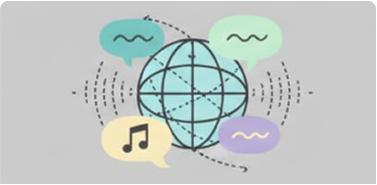
If you want more global language coverage or unique voices
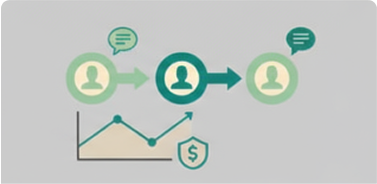
If you need a platform for both high-volume and one-off projects
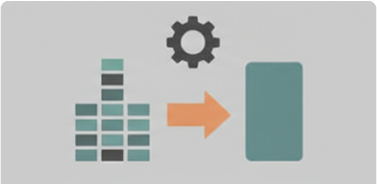
If you value seamless workflows and team features without a steep price tag


